The senior prom holds a special place in the hearts of high school graduates, marking a milestone filled with anticipation, outfit selections, and fond memories. However, as time passes, opportunities for such extravagant affairs become scarce. At Chesterbrook Residences a non-for-profit assisted living founded by three faith-based congregations , we're determined to change that narrative.
With the generous support of Women Giving Back, a local non-profit dress organization, residents are outfitted with complimentary prom attire through personalized dress fittings. Our dedicated volunteers craft corsages and boutonnieres for each attendee, while Chef Lloyd Moss and his culinary team orchestrate a delicious sit-down dinner. Every detail, from decorations to photo backdrops, is arranged to ensure an unforgettable experience. Live music sets the stage for an evening of dancing and lighthearted fun! This year, we're honored to once again welcome Sheriff Stacey Kincaid and her department, to help dance the night away. In a special highlight, we are proud to announce that one of our esteemed residents, aged 107 and a former member of the U.S. Air Force, was recently recognized with a Living Legend proclamation from the Military Women’s Memorial in 2023. Her remarkable life story and contributions continue to inspire generations. As we prepare for another unforgettable evening, we extend an open invitation to the community to join us in celebrating seniors at every stage of life. Our Senior Prom isn't merely a dance; it's a testament to the vitality and enduring bonds within our residences 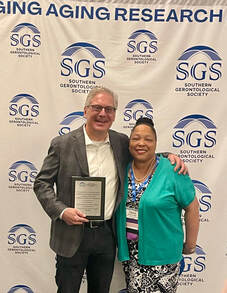 Steve Gurney, founder of the Positive Aging Sourcebook pictured with Trina Mayhan-Webb, Director of the Fairfax County Department of Family Services, Adult and Aging Division and a member of the SGS Awards Committee Steve Gurney, founder of the Positive Aging Sourcebook pictured with Trina Mayhan-Webb, Director of the Fairfax County Department of Family Services, Adult and Aging Division and a member of the SGS Awards Committee At the 2024 Southern Gerontological Society’s annual conference, held in Greenville SC, The Positive Aging Sourcebook was recognized for its outstanding media to further the understanding of aging, which is part of the mission of the society. (SGS). This recognition highlights the outstanding contribution of the Positive Aging Sourcebook to advancing aging topics and supporting the mission of SGS to enhance the quality of life for older adults through education, research, and practice.
The Media Award is presented annually by the Southern Gerontological Society to acknowledge exemplary media initiatives that promote awareness and understanding of issues related to aging. The Positive Aging Sourcebook stood out for its comprehensive coverage of diverse aspects of aging and its commitment to providing valuable resources for older adults, caregivers, and professionals in the field of aging. Trina Mayhan-Webb, Director of Adult and Aging Services in Fairfax County’s Department of Family Services and SGS awards committee member, presented the award to Mr. Steve Gurney, Founder of the Positive Aging Community. She commended the Positive Aging Sourcebook for its significant impact on the aging community: "The Positive Aging Sourcebook has demonstrated exceptional dedication to informing and empowering individuals as they navigate the aging process. Resources are plentiful but only if you know about them and know about them in time to act verses re-act to positive aging. The Sourcebook and its comprehensive approach, coupled with insightful content, has been a lifeline to many professionals, families and caregivers in promoting positive aging." The Positive Aging Sourcebook offers a wealth of information on various topics pertinent to aging, including housing and aging in place resources, purposeful living, and caregiving. With contributions from leading experts in gerontology, the Sourcebook serves as a comprehensive guide to navigating the complexities of aging and fostering a fulfilling and meaningful life in later years. "We are deeply honored to receive the Media Award from the Southern Gerontological Society," said Steve Gurney, Founder of the Positive Aging Sourcebook. "This recognition reaffirms our commitment to providing reliable and accessible resources to support individuals in embracing the opportunities and challenges of growing older. We are grateful for the opportunity to contribute to the mission of SGS and the advancement of thoughtful and creative approaches to aging." The Positive Aging Sourcebook will continue its efforts to promote positive aging and enhance the well-being of older adults through its comprehensive resources and educational initiatives. For more information about the Positive Aging Sourcebook, visit www.proaging.com About the Positive Aging Sourcebook: The Positive Aging Sourcebook is a leading resource dedicated to promoting positive aging and enhancing the quality of life for older adults. With a focus on providing comprehensive information and practical guidance, the sourcebook serves as a trusted companion for individuals, caregivers, and professionals navigating the aging process. For more information, visit www.proaging.com. About the Southern Gerontological Society: The Southern Gerontological Society is a professional organization committed to advancing the field of gerontology and improving the lives of older adults. Through education, research, and advocacy, SGS seeks to address the diverse needs and challenges of aging populations and promote healthy and active aging. For more information, visit www.southerngerontologicalsociety.org  A current state regulation imposes a framework on Administrator in Training (AIT) programs which is disadvantaging small providers by not allowing communities with fewer than 20 beds to become training facilities for administrators. This not only limits these important options with the ability to train and grow their staff from within but also places an unnecessary financial and logistical burden on our operations, hindering their mission to provide exceptional care. In response to this, a petition has been submitted to amend this regulation, aiming to create a more equitable training standard that recognizes the unique needs and contributions of small assisted living facilities. This change would allow providers owning multiple licensed ALFs within a reasonable travel distance, with a combined total capacity of at least 20 residents, to qualify as eligible training facilities. Here is how you can share your opinion (due date April 10):
18VAC95-30-170. Training facilities.
A. Training in an ALF AIT program or for an internship shall be conducted only in: 1. An assisted living facility or unit licensed by the Virginia Board of Social Services or by a similar licensing body in another jurisdiction; 2. An assisted living facility owned or operated by an agency of any city, county, or the Commonwealth or of the United States government; or 3. An assisted living unit located in and operated by a licensed hospital as defined in § 32.1-123 of the Code of Virginia, a state-operated hospital, or a hospital licensed in another jurisdiction. B. Training in an ALF AIT program or for an internship shall not be conducted in: 1. An assisted living facility with a provisional license as determined by the Department of Social Services in which the AIT program is a new ALF AIT program; 2. An assisted living facility with a conditional license as determined by the Department of Social Services in which the AIT applicant is the owner of the facility; 3. A facility that is licensed as residential only and does not require an administrator licensed by the Board of Long-Term Care Administrators; or 4. An assisted living facility with a licensed resident capacity of fewer than 20 residents. 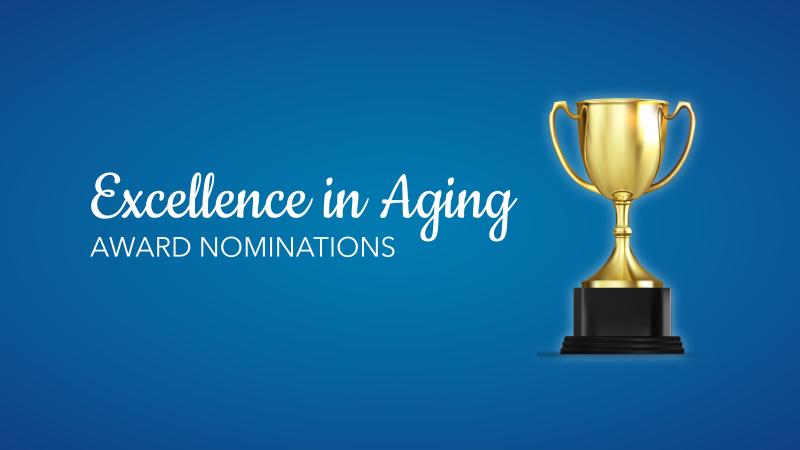 The Alexandria Commission on Aging (COA) is seeking nominations for its annual Excellence in Aging Awards. The submission deadline is Friday, March 29 at 5 p.m. The awards program will be held at City Hall (301 King Street) in the Vola Lawson Lobby on Tuesday, May 14.
The COA, which advocates for the needs of older residents in Alexandria, created the awards to honor individuals — regardless of age — as well as an organization, that has provided service to older Alexandrians or demonstrated superior contributions in advancing issues and projects that favorably affect older Alexandrians. Award winners will be recognized in four award categories:
For more information contact Pamela Austin at 703.746.5738 or email [email protected]. Sponsorship Opportunity -VHC Senior Health Department is hosting the 2nd Annual Happy Hearts Social,1/13/2024
The VHC Senior Health Department is hosting the 2nd Annual Happy Hearts Social, an event for older adults in the community to celebrate Valentine’s Day with entertainment, refreshments and fellowship. Last year, we enjoyed music, dancing and some delicious sweets. Please spread the word to your clients and friends in the community. (PDF below with registration info) We are looking for sponsors who would like to support this event and join us on February 14th, 1-3 PM at Faith Lutheran Church in Arlington. Here are some ways to become a sponsor (we welcome other ideas, too):
In return, sponsors will be recognized in the party program and included in emails that are sent to registered guests. Kate Chutuape, MPH Manager, Senior Health Department [email protected] VHC HealthTM | For You. For Life. Office: 703.558.6859 
 Senior Services of Alexandria (SSA) is pleased to recognize and thank The Landing Alexandria for supporting SSA programming enabling seniors within the City of Alexandria to receive vital services with a donation of $10,000 to start off the
holiday season! Thanks to the generous support of community partners like The Landing Alexandria, SSA is able to provide assistance to local seniors in critical areas including nutrition, community, transportation, and information. Undesignated donations like The Landing’s are key because they allow SSA to use funds where needed, like to supply Meals on Wheels and fee-free grocery delivery. SSA’s mission is to help seniors age with dignity, and this generosity plays a key role in fostering independence and self-sufficiency and in creating an inclusive environment for Alexandria seniors. "SSA staff and Board of Directors were thrilled to receive this donation in support of our work in Alexandria," Mary Lee Anderson, SSA’s Executive Director, said. "The Landing has been a wonderful partner since they opened in 2021, opening their beautiful space for SSA Board meetings, and sponsoring our annual spring Gala. This donation will make a huge difference in the lives of Alexandria’s most vulnerable older adults by supporting our work to help them stay safe in their homes and connected to the community." Richard Ludlow, Executive Director of The Landing Alexandria, shared, “We are honored to support the important work that Senior Services of Alexandria does for older adults in the Alexandria community. We value our partnership with SSA because we strive to lift up local seniors so they can achieve the highest quality of life.” Thanks to volunteers and to donors large and small, SSA is able to support Alexandria seniors 365 days per year. Individuals interested in supporting the mission and vision of Senior Services of Alexandria can do so by applying to volunteer here or visiting seniorservicesalex.org/donate/ to donate. Gifts in any amount are appreciated this holiday season!  The Virginia Department for Aging and Rehabilitative Services (DARS) released the new Virginia State Plan for Aging Services, which examines current and future needs of older Virginians.
Developed every four years by DARS, this plan fulfills federal requirements to receive Older Americans Act funding through the Administration for Community Living and state law requiring a Virginia strategic aging plan. The plan is effective Oct. 1, 2023 to Sept. 30, 2027. DARS’ multi-method approach included conducting a statewide needs assessment, engaging with stakeholders and soliciting public comment. DARS conducted the Community Assessment Survey for Older Adults, hearing from almost 9,000 older Virginians about their needs and preferences. “The Commonwealth is committed to elevating aging services and this plan equips us with the priorities and resources needed to make Virginia a great place to grow older,” said Secretary of Health and Human Resources John Littel. “This comprehensive plan serves as a blueprint to enhance the lives of older Virginians so that they can comfortably age in their own homes and communities,” said DARS Commissioner Kathy Hayfield. “Serving as the backbone of the aging network, Virginia’s 25 area agencies on aging provide vital services, such as home-delivered meals, in-home services and caregiver supports. Last year, they served 69,000 Virginians. DARS is proud to uplift their work through this plan.” Virginia Center on Aging at Virginia Commonwealth University held 31 in-person and virtual focus groups and interviews with older adults, caregivers, advocacy organizations, aging and long-term care service providers, universities and state agencies. The center also conducted an analysis on older Virginians needs as evidenced in state and national data, trends and reports. The University of Virginia Weldon Cooper Center Demographics Research Group compiled demographic data on older adults to assist with updating the funding formula for area agencies on aging and to create a more robust depiction of older Virginians. With nearly two million adults aged 60 and older in Virginia, some emerging findings were:
To access the State Plan for Aging Services and related materials: https://vda.virginia.gov/stateplans.htm To learn more about aging services in Virginia or to find your local area agency on aging: https://easyaccess.virginia.gov/ or www.dars.virginia.gov or call 2-1-1. Report Finds Systemic Gaps in Nursing Home Staffing, Wages for Long-Term Care Workers and Support for Family Caregivers
AARP’s new Long-Term Services and Supports (LTSS) Scorecard finds that more than three years after the COVID-19 pandemic began, care provided in the United States for older adults and people with disabilities is painfully inadequate. The report finds that major gaps persist in every state, including Virginia, especially related to support for family caregivers, worker wages, nursing home staffing, transportation and housing.
Ranking #28 in the country, Virginia has made some progress in improving care options for older adults, including providing Medicaid for low-income people with disabilities and in the supply of available assisted living facilities. However, the report shows there is still much more to be done to keep up with the rapidly changing needs of an aging population. "Too many Virginians rely on a long-term care system that struggles--and often fails--to keep them and their loved ones healthy and safe," said AARP Virginia State Director Jim Dau. "The AARP Scorecard shows that lawmakers and industry providers have plenty of opportunities to improve care and better meet the needs of all Virginians." Additional key findings from the report include: Family Caregiving
Recommendations Key recommendations from the report and AARP to strengthen support for long-term care and aging at home:
The LTSS Scorecard is funded by AARP Foundation with the support of The SCAN Foundation, The Commonwealth Fund, and The John A. Hartford Foundation and has been updated every three years since 2011. "Every person, regardless of where they live, their race, or their socioeconomic background, deserves long-term care that is accessible, safe, and prioritizes what matters most to them,” said Terry Fulmer, PhD, RN, FAAN, president of The John A. Hartford Foundation. “The Scorecard shows that there are significant regional and racial disparities in the care a person receives. State policymakers can and should take steps now to close the gap in access to quality care.” "The LTSS Scorecard indicates progress in some state programs, but opportunities exist for both public and private sectors to enhance LTSS,” said Sarita A. Mohanty, MD, President and Chief Executive Officer of The SCAN Foundation. “Most older adults prefer home and community-based care that meets their needs, but it remains financially out of reach for many working-class families, particularly those who are part of the 'forgotten middle'. TSF is committed to identifying, highlighting, and elevating innovative policies and programs to ensure all older adults can age well in home and community." “Equity is an essential component of high-quality health care, and is especially important in LTSS,” said Melinda Abrams, Executive Vice President, Programs, The Commonwealth Fund. “I am thrilled AARP was able to add race and ethnicity data for several indicators. This year and going forward, this new data will shed light on the experiences people of color in LTSS and draw attention to individuals with the greatest need.” To view the full Scorecard and state-by-state information visit www.ltsschoices.aarp.org. State Rankings:
AARP is the nation's largest nonprofit, nonpartisan organization dedicated to empowering people 50 and older to choose how they live as they age. With a nationwide presence, AARP strengthens communities and advocates for what matters most to the more than 100 million Americans 50-plus and their families: health security, financial stability and personal fulfillment. AARP also produces the nation's largest circulation publications: AARP The Magazine and AARP Bulletin. To learn more, visit www.aarp.org/about-aarp/, www.aarp.org/español or follow @AARP, @AARPenEspañol and @AARPadvocates on social media. About AARP Foundation AARP Foundation works to end senior poverty by helping vulnerable people over 50 build economic opportunity. Our approach emphasizes equitable outcomes for populations that have faced systemic discrimination. As AARP's charitable affiliate, we serve AARP members and nonmembers alike. Through vigorous legal advocacy and evidence-based solutions, and by building supportive community connections, we foster resilience, advance equity, and restore hope. To learn more, visit aarpfoundation.org or follow @AARPFoundation on social media. About The SCAN Foundation The SCAN Foundation envisions a society where all of us can age well with purpose. We pursue this vision by igniting bold and equitable changes in how older adults age in both home and community. For more information, visit www.TheSCANFoundation.org. About The Commonwealth Fund The Commonwealth Fund, among the first private foundations started by a woman philanthropist—Anna M. Harkness—was established in 1918 with the broad charge to enhance the common good. The mission of The Commonwealth Fund is to promote a high-performing health care system that achieves better access, improved quality, and greater efficiency, particularly for society’s most vulnerable, including low-income people, the uninsured, and people of color. The Fund carries out this mandate by supporting independent research on health care issues and making grants to improve health care practice and policy. For more information, visit: https://www.commonwealthfund.org. About The John A. Hartford Foundation The John A. Hartford Foundation, based in New York City, is a private, nonpartisan, national philanthropy dedicated to improving the care of older adults. The leader in the field of aging and health, the Foundation has three areas of emphasis: creating age-friendly health systems, supporting family caregivers, and improving serious illness and end-of-life care. For more information, visit: https://www.johnahartford.org. 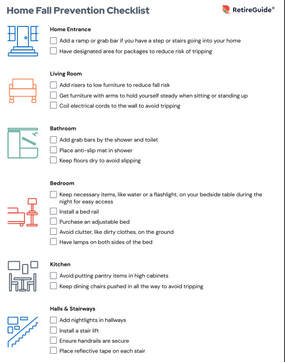 Fall prevention and senior safety are paramount considerations in ensuring the well-being and independence of our elderly population. As individuals age, their susceptibility to falls and related injuries increases, making it crucial to implement proactive measures. This includes creating safe and clutter-free living spaces, installing handrails and grab bars, and ensuring proper lighting. Regular exercise programs designed to enhance balance and strength, as well as routine health check-ups, can also play a pivotal role in reducing the risk of falls. Moreover, fostering awareness among seniors about potential hazards and providing education on fall prevention strategies are essential steps in safeguarding their quality of life. By prioritizing fall prevention and senior safety, we empower older adults to lead active, confident lives, free from the fear of preventable accidents.
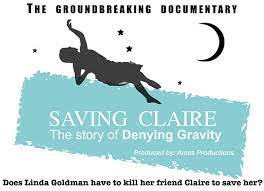 The Saving Claire Falls Prevention Project starts with a groundbreaking documentary. The film explores the complex nature of aging, resistance to change and all the relatable patterns that increase fall risk. Claire’s
journey is a cautionary tale. The film explores Claire’s attitudes and actions, the spiral after her fall, and the dramatic events that follow. Audiences connect with and relate to Claire. After people see Saving Claire, they report that they are ready to change their behavior. The Project, sponsored in part by the Marymount Center for Optimal Aging (MCOA), continues with a lively interactive discussion and Q&A with local experts: doctors, first responders, physical therapists, health educators, community leaders and others. This local focus is the key to providing a clear path to fall prevention actions in the viewers’ backyard. Saving Claire can be implemented with community screening events, or by using zoom or other virtual meeting platforms, community television, YouTube and Facebook Live. Platinum Sponsor: $2,500
Gold Sponsor: $1,500
Silver Sponsor: $500
Bronze Sponsor: $250
NOTE: Portions of sponsorships may be tax deductible. If you are interested in a different sponsorship opportunity (exclusive or food and beverage sponsorship), please reach out to Sara Pappa at [email protected]. |
Archives
July 2024
Categories |
||||

 RSS Feed